
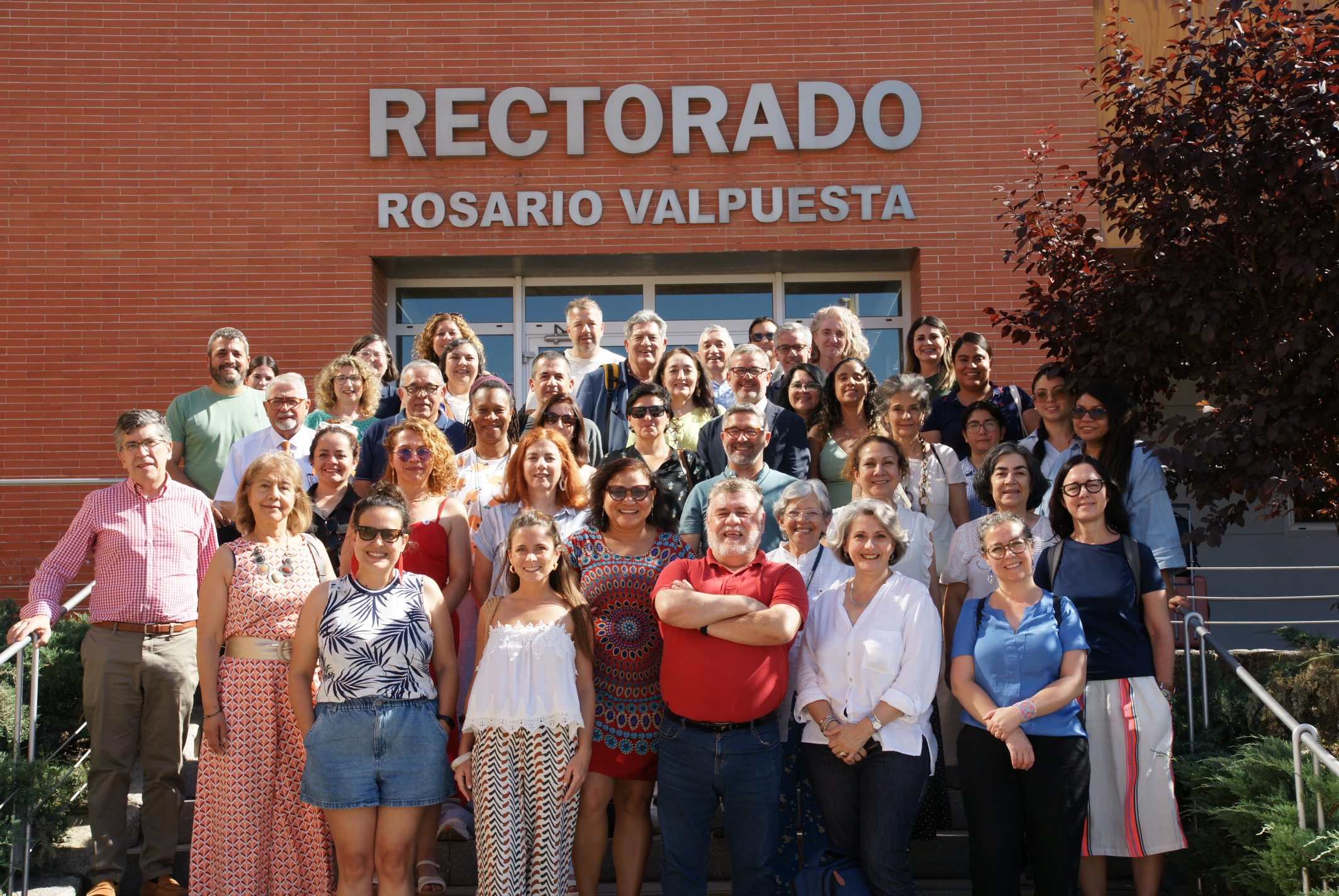
Representatives from Ibero-American universities share experiences and proposals to consolidate a more inclusive higher education system committed to equal opportunities
Seville, June 9. The 3rd EDUDER Global Meeting concluded this Tuesday after several days of work during which universities from Europe and Latin America shared experiences, results, and proposals to improve inclusion in higher education. The final day was marked by the exchange of best practices in mentorship, reflection on the sustainability of the project’s initiatives, and the presentation of tools aimed at transferring the EDUDER model to other academic institutions.
Mentorship as a tool for student retention and well-being
The first session of the morning was dedicated to dialogue and reflection on the design, implementation, and training associated with the mentorship programs developed by the participating universities.
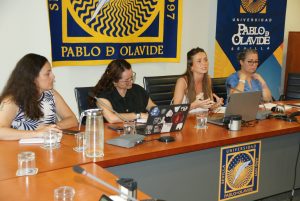
Mesa 1
Among the contributions, the experience presented from Brazil stood out, where a reflection was shared that summarized some of the challenges faced by university students: “The university is public, but it is paid for with one’s soul.” The phrase served to highlight the impact that certain situations can have on students’ mental health and emotional well-being, within the context in which mentorship programs were implemented.
The experiences presented by the participating universities coincided in emphasizing the need to better understand students’ realities in order to respond effectively to their needs. From Mexico, it was stressed that mentorship is a fundamental tool for promoting student retention in higher education, and the importance of regularly updating these programs was underscored.
Initiatives aimed at both faculty and students were also presented. In the case of educators, training focuses on improving the early detection of situations of vulnerability, while programs for students seek to strengthen skills such as self-esteem, self-directed learning, self-regulation, and digital competencies.
Other universities shared experiences related to the creation of the inclusive tutor role, the identification of accessibility barriers, and the promotion of professional learning communities aimed at fostering more inclusive university environments.
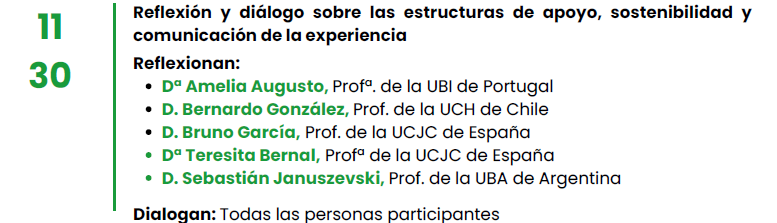
Resources, sustainability, and communication: key factors in consolidating the project
The second panel focused the discussion on the factors that make it possible to ensure the continuity and impact of the actions developed by EDUDER.
Participants agreed on the importance of having clearly defined support structures, robust regulatory frameworks, and effective tools to identify situations of vulnerability within higher education institutions.
Sustainability was another key issue highlighted during the session. Experts emphasized that the continuity of the good practices promoted by the project will largely depend on institutional commitment and the existence of stable teams capable of maintaining initiatives beyond the formal duration of the European program.
The strategic role of communication was also underscored as an essential element in providing visibility, coherence, and social outreach to the actions undertaken. In this regard, participants stressed the need to strengthen both internal communication among participating institutions and the external dissemination of the results achieved.
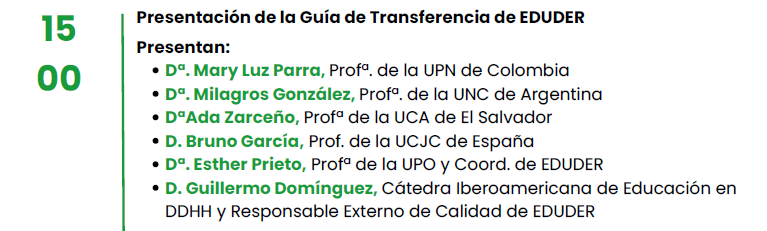
The EDUDER Transfer Guide: a tool to extend the inclusive model

Mesa 3
The third and final panel was dedicated to the presentation and analysis of the EDUDER Transfer Guide, conceived as a tool to enable the transfer of the methodologies, lessons learned, and best practices developed within the project to universities that are not part of the consortium.
During the session, the key elements required to facilitate the adaptation of the EDUDER model to different institutional and territorial contexts were analyzed, thereby promoting the expansion of its impact across the Ibero-American higher education space.
Speakers agreed in highlighting that the effective transfer of knowledge and experiences requires not only technical and methodological tools, but also a deep understanding of the real needs of the people targeted by these initiatives.
As a final reflection of the meeting, participants emphasized the importance of actively listening to people in situations of vulnerability in order to design effective responses tailored to their needs. This conclusion encapsulates the spirit of the EDUDER project and its commitment to building more inclusive and accessible universities, engaged in social transformation.
With this final session, the 3rd EDUDER Global Meeting officially came to a close, having strengthened international cooperation among universities and advanced the development of shared strategies to ensure more inclusive higher education across the Ibero-American region.

Entrega de diplomas